Derek Wilson
Marinscope
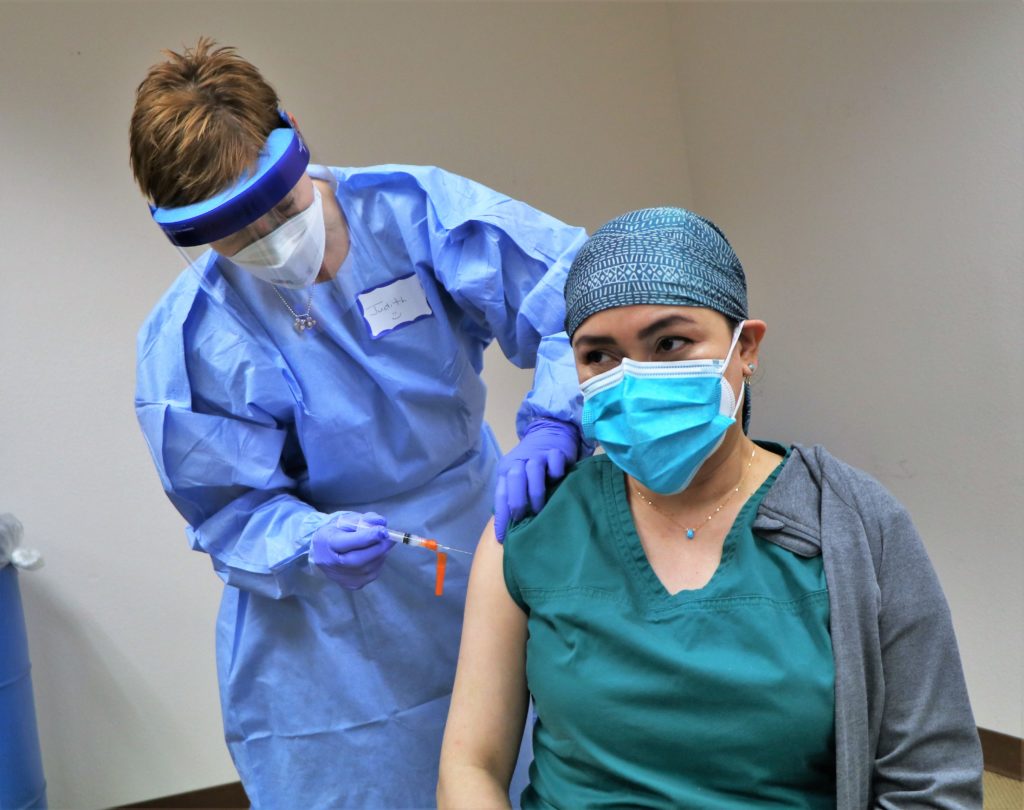
The new year is not bringing any immediate relief from COVID-19, it seems.
Dining at restaurants and going to concerts and movies still won’t be an option for most people in Marin County in the near future after the California Department of Public Health indefinitely extended the Bay Area stay-at-home order.
“As case rates increase, ICU capacity decreases, and the numbers are still moving in the wrong direction,” said Dr. Matt Willis, the County’s Public Health Officer. “The Bay Area is down to 4 percent ICU capacity, the lowest it’s ever been. We feel it’s best to inform our communities that the stay-home order likely will remain in place until we reverse the trend across the region. We can all do our part to reopen our community by sticking to the stay-home order and preventing new infections.”
The original four-week stay-at-home order went into effect in Marin County on Dec. 17, 2020, triggered by dwindling intensive care unit capacity at hospitals in the Bay Area region.
The Bay Area region must increase its intensive care unit availability to at least 15 percent before the extended stay-at-home order might be lifted, but that’s a tough climb. As of last Thursday’s count, Marin County’s eight of Marin County’s COVID-ICU facilities are occupied. Since the pandemic struck the Bay Area in March 2020, Marin County has suffered 10,588 cases of COVID-19 and 143 deaths, including cases among inmates at San Quentin State Prison.
The road to recovery got more difficult recently as Marin County and the State of California reported record highs in new COVID-19 cases and COVID-related deaths between December 30-January 9. Marin reported another 108 new cases during the most recent count.
“We are right now in a crisis of ever-increasing number of cases,” Willis said, pointing to a post-holiday surge that saw an alarming amount of new cases, including 145 on Dec. 30, the highest one-day tally to date. “It’s not surprising but it is disappointing given all of our communication around indoor avoiding indoor. This is unprecedented and the measures we are taking are also unprecedented. Unfortunately that is the reality that we inherit.”
The numbers around the state for the most part are not encouraging. The Southern California and San Joaquin regions have near-zero percent ICU availability, while the Greater Sacramento region is estimated at 6.4 percent. Only the less-densely populated Northern California region (27.5 percent) is above the minimum threshold and is not under a regional stay-at-home order.
There are currently reasons for hope and for concern in Marin County. Although the first phase of COVID vaccinations is almost complete, health officials are reportedly still worried we might have yet to feel the full effects of a possible post-holiday surge.
At the latest count, most of the 11,000 vaccine doses distributed in Marin County have been administered. Officials expect there will be fewer than 100 doses left by the end of this week before the county moves to the next round of vaccinations. In comparison, Sonoma County had administered 7,445 of its 14,650 doses by the end of last week.
Since California began distributing the vaccine in December, a total of 2,007,600 doses have been shipped to local medical providers. The first people to get vaccinated were those. At the greatest risk of infection, including frontline workers and long-term care residents and staff.
The next phase of vaccination will begin with people ages 75 and older and workers in emergency services, education, childcare and food and agriculture. The next tier will include people ages 65-74, workers in the transportation and logistics sector, transportation, commercial, residential and shelter facilities services, as well as the homeless and inmates.
…
Leave a Reply